My two cents on Determinism and a binary universe
We often assume we are the authors of our actions: that our decisions, from the trivial to the transformative, emerge from a place called “free will.” Similarly, we accept that some things in the universe are just… random.
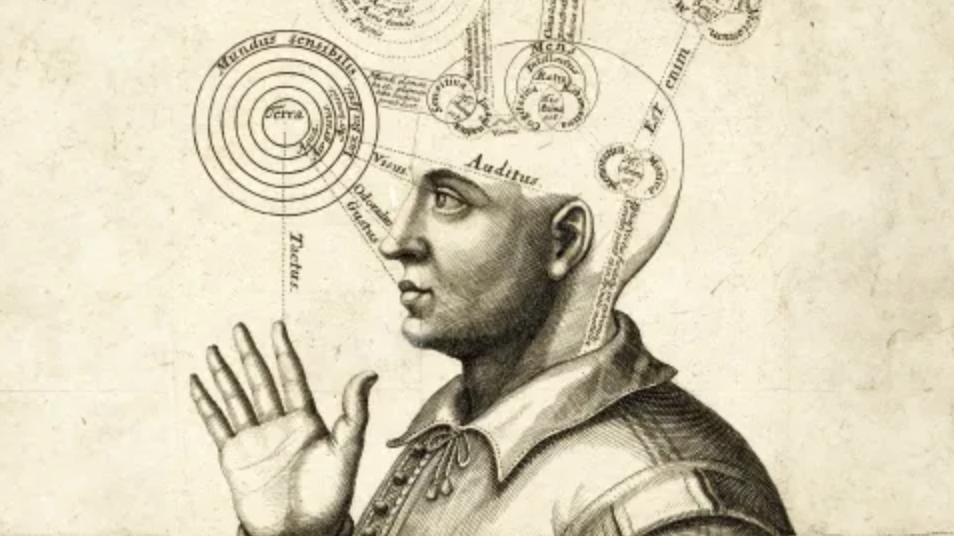
But what if both of these ideas are simply artifacts of a deterministic system we don’t yet fully understand?
I do not believe in ontic randomness. And I certainly do not believe in free will.
These two ideas, I argue, are deeply linked, and both are myths born from the limits of human comprehension.
Everything in the universe can ultimately be broken down into interactions of matter and energy. At the most basic level, information itself is binary: 0s and 1s. A bit is either on or off. And yet from this base, we’ve built entire worlds: AI, the internet, simulation engines, language models.
Now imagine giving a modern language model, like o3 or Gemini 2.5, to a scientist from 50 years ago and asking them what it’s made of.
Without our current understanding of neural networks or digital information theory, it would be virtually impossible for them to deduce that, at its most elemental level, the model is nothing more than trillions of binary switches flipping on and off.
They would almost certainly come up with a grand mystical theory to make sense of it; one that matched the limits of their scientific comprehension.
I believe the concept of free will is similar: a myth born not of truth, but of a gap in understanding.
I believe consciousness and “choice” are no different. Our brains are unimaginably complex biological circuits: inputs -> logic gates -> outputs. Think AND, OR, XOR, NAND, etc. Neurons fire based on electrochemical inputs shaped by genetics, environment, memory, and a chain of prior causes.
No thought emerges arbitrarily. No behavior arises without cause.
If we could simulate all of it (every neuron, every ion, every field) we could, in theory, predict every action. Just like code.
A Thought Experiment
Imagine we could duplicate the universe, atom for atom. In this identical twin cosmos, there exists a version of you: born to the same parents, exposed to the same childhood, traumas, books, and experiences.
Now suppose you’re reading this article, right here, right now.
Would your duplicate self be doing something different?
I believe not.
I believe duplicate Will would be writing this exact same article. Thinking the exact same thoughts. Typing the exact same words.
The notion that you “chose” to write it collapses when you recognize that your mind is a machine operating within the rules of physics. If everything (every neuron, every glial cell, every memory fragment) was created by the same conditions, the output must be the same.
Free will, then, is simply a placeholder for complexity. It feels real because we can’t track every variable. But that doesn’t equate to it being true.
The Quantum Counterargument
A compelling argument against my view comes from physics, specifically, quantum mechanics.
At the quantum level, particles like electrons don’t have definite positions until we observe them. They exist in a superposition: a cloud of probabilities described by a wave function. When measured, this wave function “collapses” and reveals a single outcome.
This isn’t just randomness from ignorance. It’s not like shooting dice where we just don’t know all the forces at play. Quantum randomness, according to many physicists, is ontic, meaning that it is inherent to the universe itself.
Experiments based on Bell’s Theorem, like those conducted by Alain Aspect, have shown that no local hidden variable theory can explain the strange correlations of entangled particles. These results challenge the idea that the universe is strictly deterministic.
If true, then randomness isn’t just a quirk of measurement; rather, it’s a core feature of nature.
However, even in quantum physics, not everyone believes randomness is truly fundamental. Several major interpretations preserve determinism, though at a cost:
- Many-Worlds Interpretation (Hugh Everett): Every possible outcome happens in a branching multiverse. The wave function never collapses. Determinism is preserved, but across infinite timelines.
- Bohmian Mechanics (David Bohm): Introduces hidden variables that determine outcomes precisely. The apparent randomness is just our ignorance of a deeper level of reality.
These interpretations show that randomness might not be intrinsic. It could simply be the next “myth” science eventually deconstructs, just as we’ve done with omens and alchemy.
The Myth of the Mystical Mind
Free will is often treated as a sacred truth. A mystical force. The essence of what makes us human. But I see this as another example of how we mythologize what we don’t understand.
We used to say storms were acts of gods. That disease was punishment from the heavens. That the stars dictated our destinies.
As science progressed, we replaced myth with mechanism. And we will do the same with consciousness.
Every decision we make is the result of trillions of electric signals in a brain shaped by forces outside our control: evolution, environment, experience. The feeling of control is compelling, but misleading.
We simply don’t yet understand the full mechanics of the brain.
If the universe is deterministic, even if wildly complex, then free will is an illusion born from causality.
And if the universe is truly random at its core, as some interpretations of quantum mechanics suggest, then our actions are not chosen; rather, they are the result of pure chance.
Either way, we are not the authors. We are the output. A product of physics, biology, and cause. Not writing the story, but being written by the fundamental scientific laws that govern everything.